Programmes

From Early Years to IGCSE

Four stages, one sequence. Choose a stage for what your child learns, how the day runs and how progress is checked.

Grades and Cambridge stages line up as follows: Pre-KG to UKG are Early Years 1 to 3 (UKG overlaps Stage 1), Grades 1 to 5 are Stages 2 to 6, Grades 6 to 8 are Stages 7 to 9, and Grades 9 and 10 are IGCSE.

Pre-KG, LKG, UKG · Ages 3 to 6

Early Years: learning through play

Rooms are set up in zones for building, role play, early writing, maths materials, sand and water, books and art. There is no teacher’s desk and no front of the room.

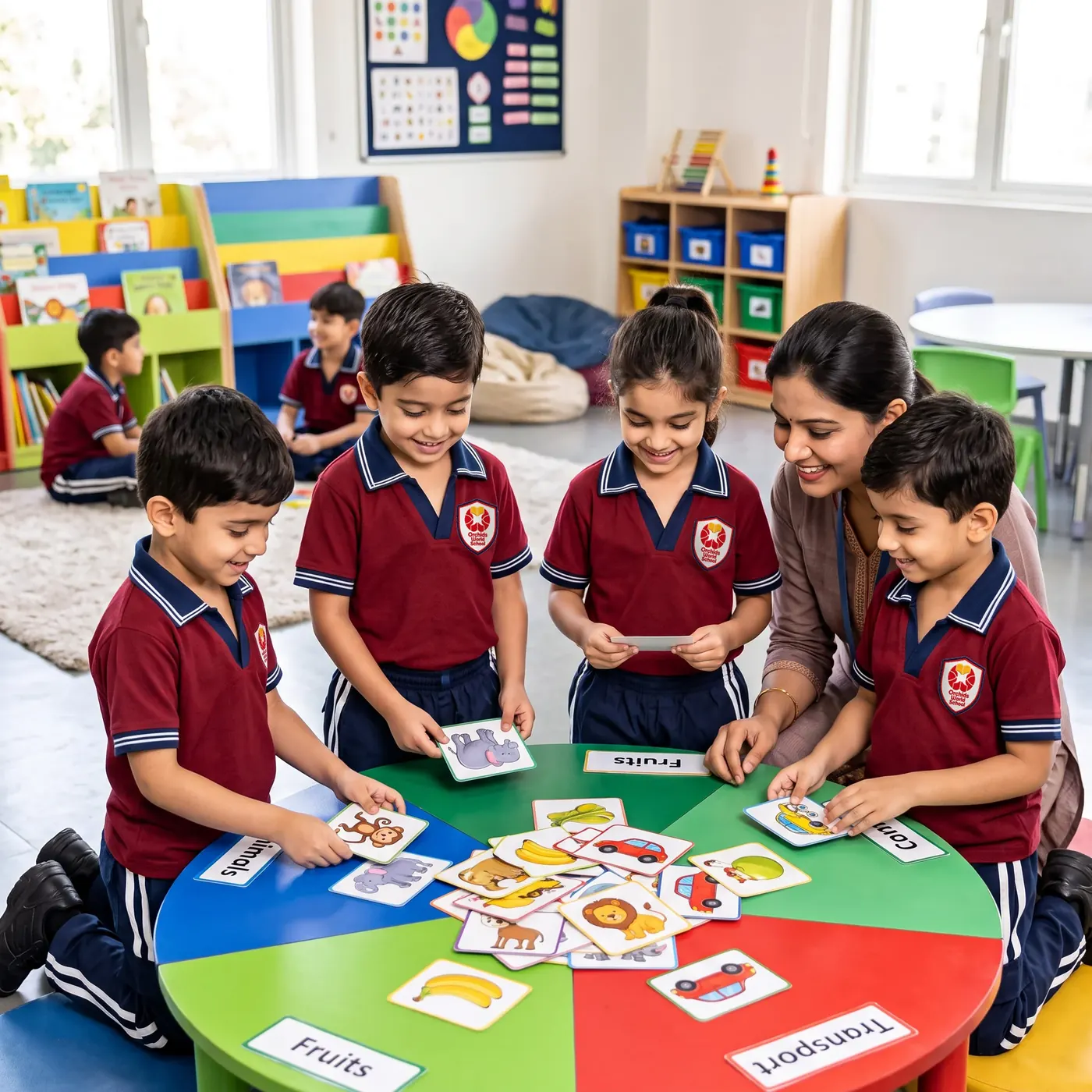
Early Years. Small-group work at a zoned table.
Small-group work at a zoned table.
  • Short, focused group timeEvery day adults teach small groups phonics and number, then spend the rest of the time talking with children and watching closely.
  • No tests, no gradesTeachers observe and record. Each child has a portfolio and you receive a written learning story each term.
  • More adults per childUp to 16 children in Pre-KG with one adult for every 8. Up to 20 in LKG and UKG with one adult for every 12.
  • LanguagesSecond and third language from UKG, as at Ambitus today. Dance, music, art, Show and Tell, storytelling and SOCH sit within the school day.

A typical day indicative

  1. Arrival, children self-register
  2. Morning circle
  3. Free choice in the zones, small-group phonics and number
  4. Snack
  5. Outdoor play and learning, every day
  6. Story and language
  7. Lunch with teachers at the table
  8. Rest for Pre-KG, quiet activities for LKG and UKG
  9. Art, music and movement
  10. Review circle and tidy up
Grades 1 to 5 · Ages 6 to 11

Primary: strong foundations

In Grades 1 and 2 one class teacher teaches English, Maths, Science and Global Perspectives, so your child is known well by one adult. From Grade 3 specialists take Science, Computing and languages, while the class teacher keeps English and Maths.
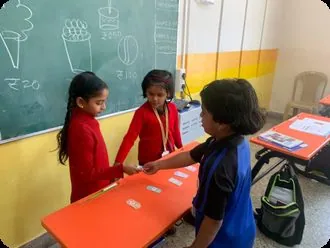
Grades 1 to 3. Children running a classroom shop in a financial literacy lesson.
Children running a classroom shop in a financial literacy lesson.

Subjects

  • English
  • Mathematics
  • Science
  • Global Perspectives
  • Computing and Digital Literacy
  • Art, Music and PE
  • Second and third language

There is no separate EVS subject in Cambridge. Science and Global Perspectives cover it, and the state-language syllabus adds local history and geography.

How progress is checked

  • Every dayTeachers mark to respond, not only to score, and adjust the next lesson.
  • From Grade 2 (Stage 3)Cambridge Progression Tests in English, Maths and Science each year, marked in school. We share the outcomes with you.
  • Grade 5 (Stage 6)Cambridge Primary Checkpoint, marked by Cambridge, with the report arriving in early May, at the start of Grade 6.

A typical day in Grades 1 and 2 indicative

  1. Registration and assembly
  2. English
  3. Mathematics
  4. Break
  5. Science
  6. Art, Music or PE
  7. Lunch
  8. Reading
  9. Global Perspectives or Digital Literacy
  10. State language or Hindi
Grades 6 to 8 · Ages 11 to 14

Lower Secondary: building for IGCSE

Every subject is taught by a specialist. These three years build what IGCSE depends on: extended writing, careful practical work in science and independent research. We do not start IGCSE content early. Children who skip this groundwork know more facts and score worse.

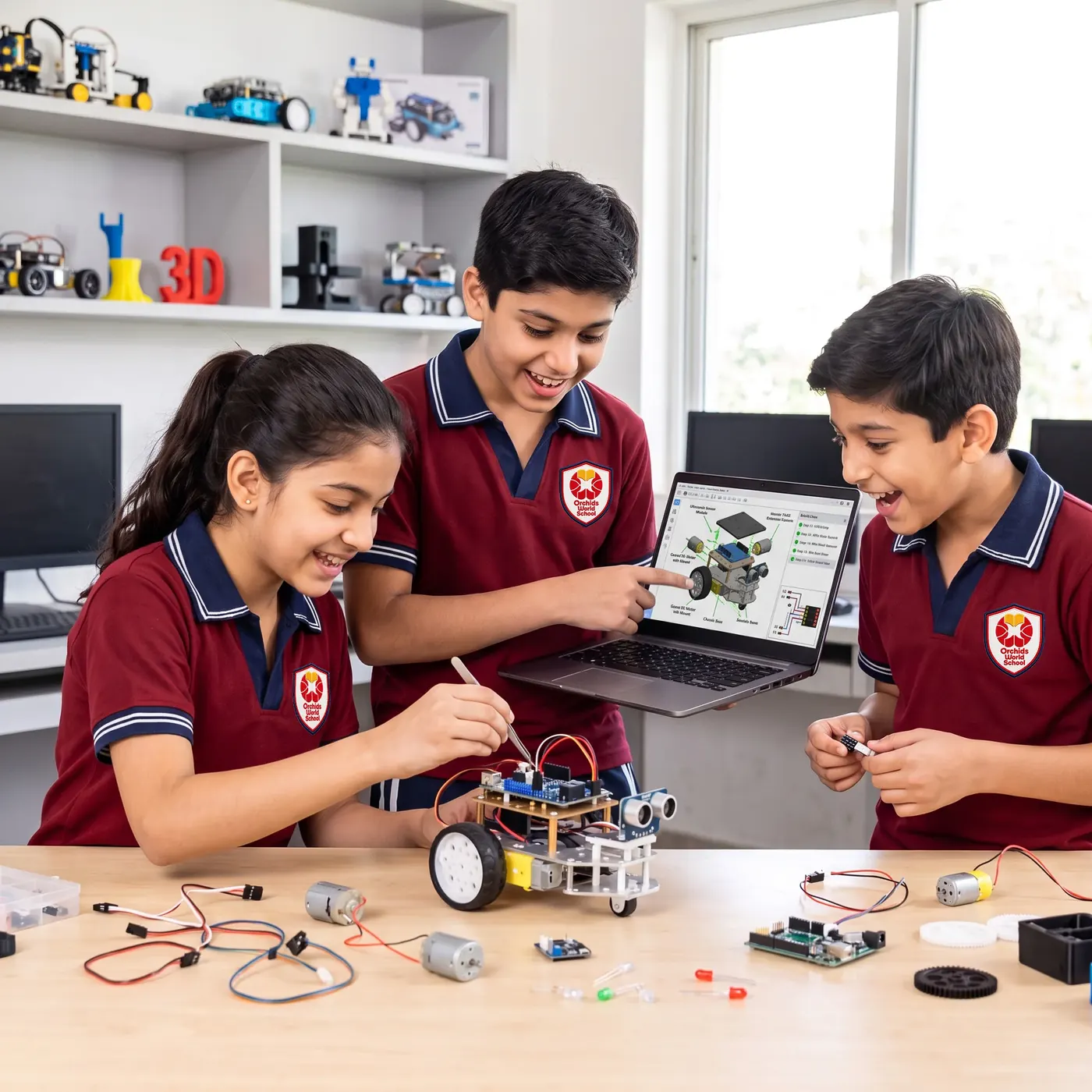
Computing and coding. Python and electronics projects run through the middle years.
Python and electronics projects run through the middle years.

Subjects

  • English
  • Mathematics
  • Science
  • Global Perspectives
  • History and Geography
  • Computing
  • State language (Kannada or Telugu), Hindi and French
  • Art, Music and PE

Grade 8 (Stage 9): choosing the road ahead

  • Cambridge Lower Secondary Checkpoint at the end of Grade 8, introduced by 2028-29.
  • An options evening and a one-to-one conversation with every family.
  • IGCSE for Grades 9 and 10, with CBSE available as an optional route.
  • We build the timetable around what children actually choose.
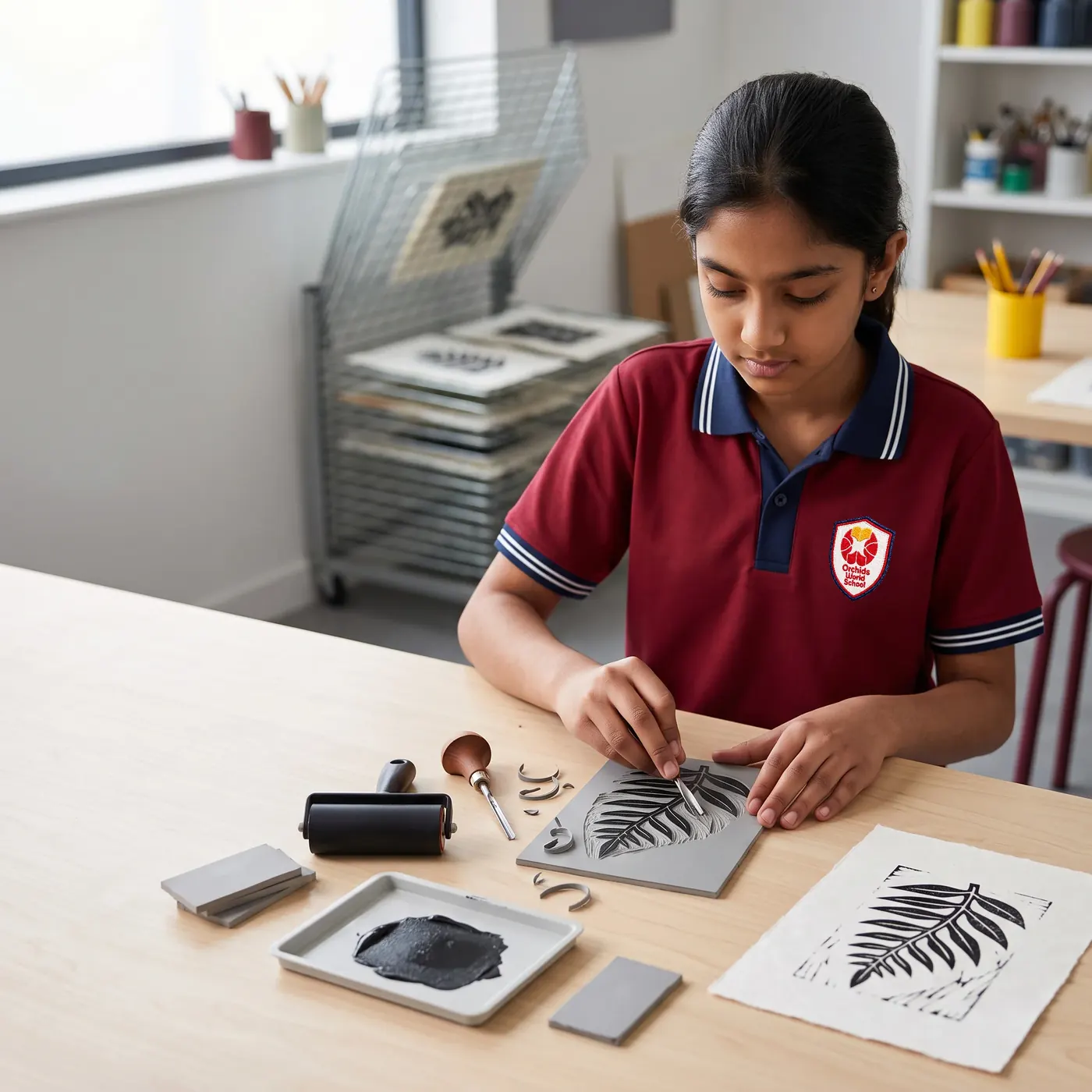
Printmaking. Linoleum and silkscreen from Grade 6.
Printmaking: linoleum and silkscreen from Grade 6.
Grades 9 and 10 · Ages 14 to 16

IGCSE: the final two years

A two-year course with external exams set and marked by Cambridge at the end of Grade 10. Grades run from A* to G. Most students take seven or eight subjects. The first Grade 9 batch starts in 2028-29.

How we run IGCSE

  • Extended level by defaultSome subjects have a Core level capped at grade C. We enter a student for Core only after talking with you, and it is agreed in writing.
  • The ICE certificateStudents with seven subjects across the required groups can earn the Cambridge ICE award. We enter every eligible student.
  • Honest predicted gradesFrom Grade 9 you see a working-at grade, a predicted grade and an effort rating, so there are no surprises in August.
  • Two full mock examsIn Grade 10, analysed question by question, with help aimed at named students.
  • A secure exam centreExams are held on campus under Cambridge’s rules, run by a dedicated exams officer.
  • The exam calendarThe May to June series, with results in August. Retakes in October to November or February to March.

Planned subject offer

Languages
First Language English; English as a Second Language where needed; Hindi as a Second Language; French
Humanities
Global Perspectives; Economics; History or Geography
Sciences
Co-ordinated Sciences (double award); Biology, Chemistry and Physics separately for future science students
Mathematics
Mathematics; Additional Mathematics
Creative and professional
Business Studies; Computer Science; Art and Design

The offer is planned and will be confirmed from Grade 8 families’ choices. Career counselling, MUN, coding, AI and IoT projects, sport and the arts continue through Grades 9 and 10.

Grades 9 to 12

Where the path leads

Grades 9 and 10

CBSE as an optional route

Cambridge is the programme from Pre-KG to Grade 8. In Grades 9 and 10 families can choose IGCSE or CBSE. Families choose at the Grade 8 options evening, after the Checkpoint report and a one-to-one conversation. Switching after the start of Grade 9 is hard because both are two-year courses, so please decide before Grade 9.

A CBSE route suits families planning JEE, NEET or a CBSE Class 12. Neither IGCSE nor A Level prepares a student for JEE or NEET on its own.

Grades 11 and 12

After Grade 10

Both campuses run to Grade 10 today. We plan to offer Cambridge AS and A Level in Grades 11 and 12 from 2029-30, so students can stay on campus after IGCSE. We say so at the first enquiry so families can plan, and our guidance starts in Grade 8.

  • Class 11 in IndiaIGCSE is treated as equivalent to Class 10, so students can join Class 11 on CBSE, ISC or another Indian board.
  • Cambridge AS and A LevelPlanned at our campuses from 2029-30 for students who want to stay on the international route. The IB Diploma is available at other schools.
  • Entrance-exam trackFamilies aiming at JEE or NEET can choose the CBSE route in Grades 9 and 10 and plan coaching alongside it.

Not sure which stage your child would join? The admissions team will work it out from their date of birth.

Talk to admissions